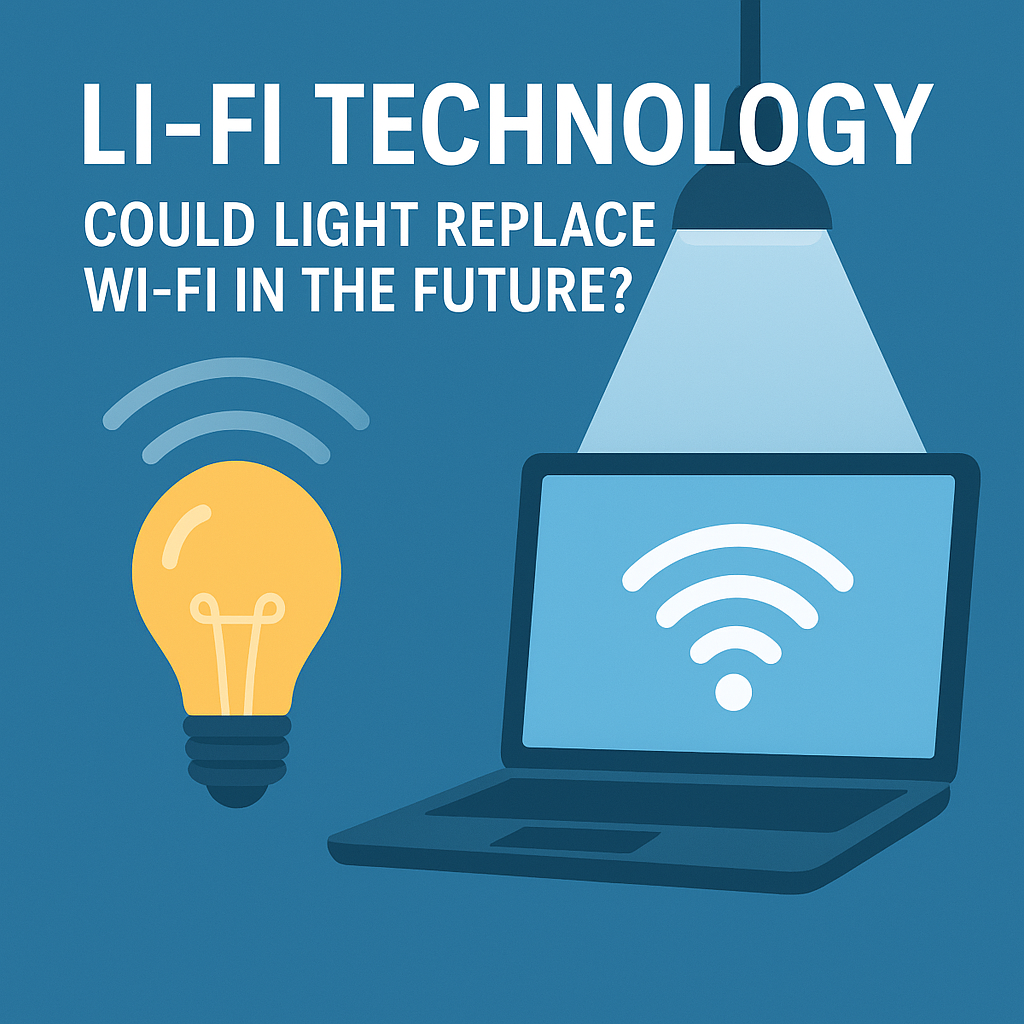
Li-Fi Technology: Could Light Replace Wi-Fi in the Future?
What Is Li‑Fi?
How Li‑Fi Works (In Plain Language)
Why Light Could Outperform Wi‑Fi
1) Potential for Higher Bandwidth
2) More Secure by Design
3) Reduced Radio Interference
4) Big Gains in Specific Industries
Where Li‑Fi Could Be Used First
Smart Buildings and Offices
Hospitals and Healthcare Facilities
Warehouses and Industrial Environments
Transport and Smart Mobility
Airports, Libraries, and Public Venues
Could Li‑Fi Replace Wi‑Fi Entirely?
1) Light Obstacles and Mobility Challenges
2) Infrastructure and Device Adoption
3) Environmental Factors
4) Standardization and Ecosystem Development
The More Likely Future: A Hybrid Network
What Speeds Can Li‑Fi Achieve?
Latency, Gaming, and Real-Time Applications
How Li‑Fi Could Change Smart Homes
Potential Downsides to Consider
- Line-of-sight dependence: More sensitive to obstructions than many radio technologies.
- Hardware requirements: Receivers must support the communication method.
- Compatibility and standards: Wider adoption depends on consistent protocols.
- User experience: Switching between light-based and radio-based connectivity must feel seamless.