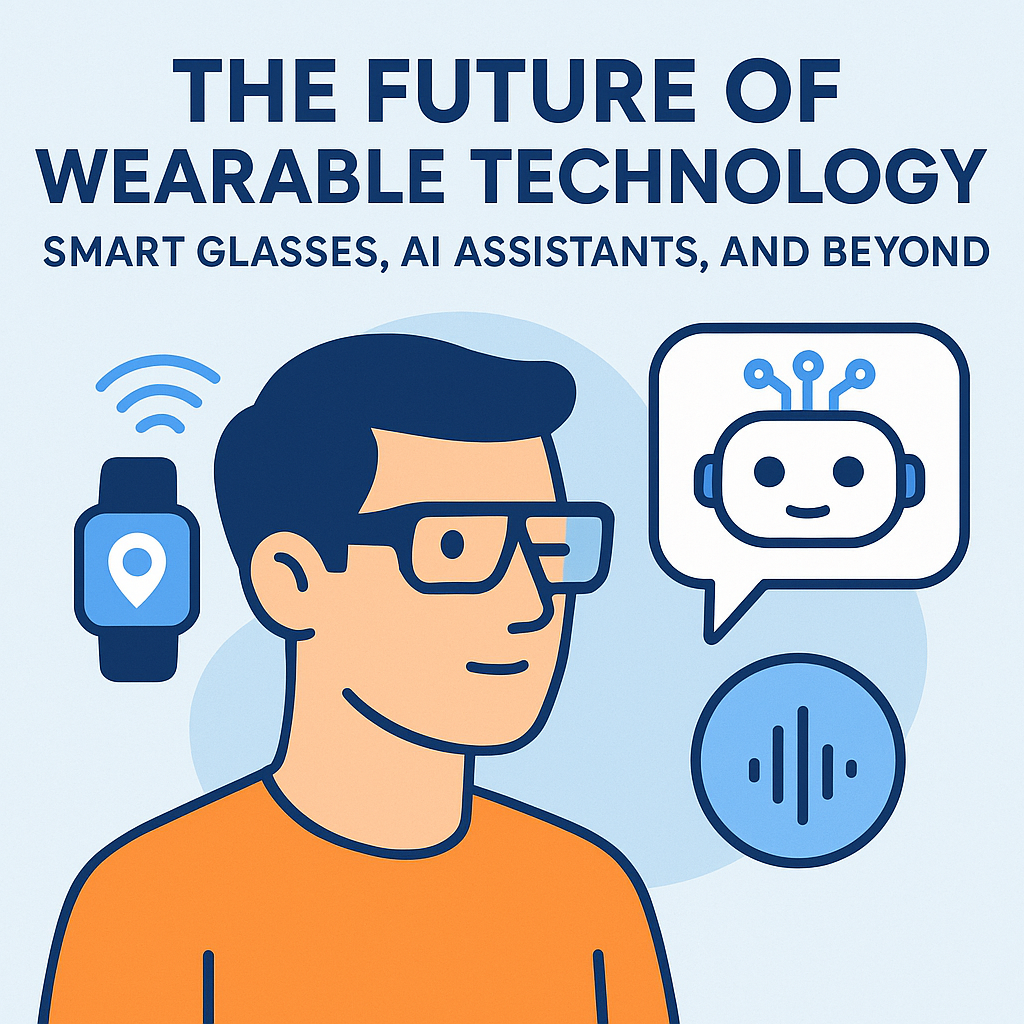
The Future of Wearable Technology: Smart Glasses, AI Assistants, and Beyond
Why Wearables Are Entering a New Era
- Reduce friction in daily tasks (hands-free reminders, navigation, note-taking)
- Improve safety (fall detection, health alerts, emergency signaling)
- Enhance accessibility (real-time captions, translation, visual assistance)
- Support well-being (stress detection, posture coaching, sleep insights)
Smart Glasses: The Next Big Wearable Interface
How Smart Glasses Work
- Display technology (micro-displays, waveguides, or other optical systems)
- Cameras and sensors (for environment awareness and motion tracking)
- Microphones for voice commands
- AI processing for tasks like object recognition and text understanding
- Connectivity (Wi-Fi, Bluetooth, and sometimes cellular)
Real-World Use Cases That Make Sense
- Navigation “in the moment”: arrows appear where to go, not where a screen says to go.
- Hands-free communication: live captions, translation, and voicemail-to-text could reduce barriers.
- Work and training support: step-by-step overlays for repairs, equipment maintenance, or industrial training.
- Travel assistance: understand signs, schedules, and directions on the go.
- Accessibility tools: identify objects, describe scenes, and assist users with visual impairments.
AI Assistants in Wearables: From Commands to Collaboration
What Changes When AI Is Wearable?
- Faster interaction: speak naturally, confirm with gestures, and receive micro-updates.
- Context awareness: the assistant can infer intent from location, activity, time, and visual cues.
- Proactive help: instead of waiting for a request, the assistant can suggest the next best action.
- Less screen time: important info comes to you when you need it.
Examples of Wearable AI Assistant Features
- Summarize a meeting discussion and highlight action items
- Translate a conversation in real time while keeping the flow natural
- Detect stress signals or abnormal patterns and recommend rest or breathing exercises
- Spot safety risks—like reading a warning label or recognizing hazards in a workplace
- Turn visual inputs into tasks (“Show me how to set up this device”)
Beyond Smart Glasses: The Wearable Ecosystem Expands
Smart Watches and Rings
AR Headsets and Optical Computing
Wearable Medical Devices
- Detect early warning signs for conditions using multimodal sensors
- Provide personalized interventions—like hydration reminders or activity adjustments
- Support remote patient monitoring for chronic diseases
- Offer medication adherence coaching through gentle prompts
How AI Will Make Wearables More Personal
From Generic Data to Personalized Guidance
- “You usually feel best after a 20-minute walk in the afternoon—want to try it today?”
- “Your sleep pattern suggests you’ll benefit from a lighter evening routine. Want suggestions for tonight?”
- “Your heart rate variability has shifted. Let’s check if you’re under stress and guide a quick reset.”
Privacy, Security, and Trust: The Non-Negotiables
- Data minimization: only collect what’s needed
- On-device processing: keep sensitive data local when possible
- Clear consent: users should understand what’s captured and why
- Security protections: strong encryption and account safeguards
- Transparency controls: indicator lights, permissions dashboards, and easy toggles
Battery Life and Comfort: The Engineering Challenge
- Weight and fit (so they can be worn all day)
- Display brightness and safety
- Thermal management (keeping devices cool)
- Power efficiency (more AI on-device, optimized chips, better batteries)
What Comes Next: Wearables as a “Digital Companion”
- It helps you find information without interrupting your life
- It supports your body with proactive health insights
- It makes communication easier across languages and abilities
- It reduces cognitive load by handling reminders and planning
- It improves safety with real-time alerts
How to Prepare for the Wearable Future
- Start with one ecosystem: if you buy a smartwatch, consider how it integrates with your phone and potential future devices.
- Choose features you’ll actually use: navigation, health insights, accessibility tools, or communication support.
- Review privacy settings: understand permissions for microphone, camera, and location.
- Think in terms of outcomes: ask “How will this make my day easier?” not “What specs does it have?”
- Watch for maturity: early devices can be great, but look for second-generation improvements in comfort and reliability.